How Can a Period Underwear Manufacturer Improve Product Performance?
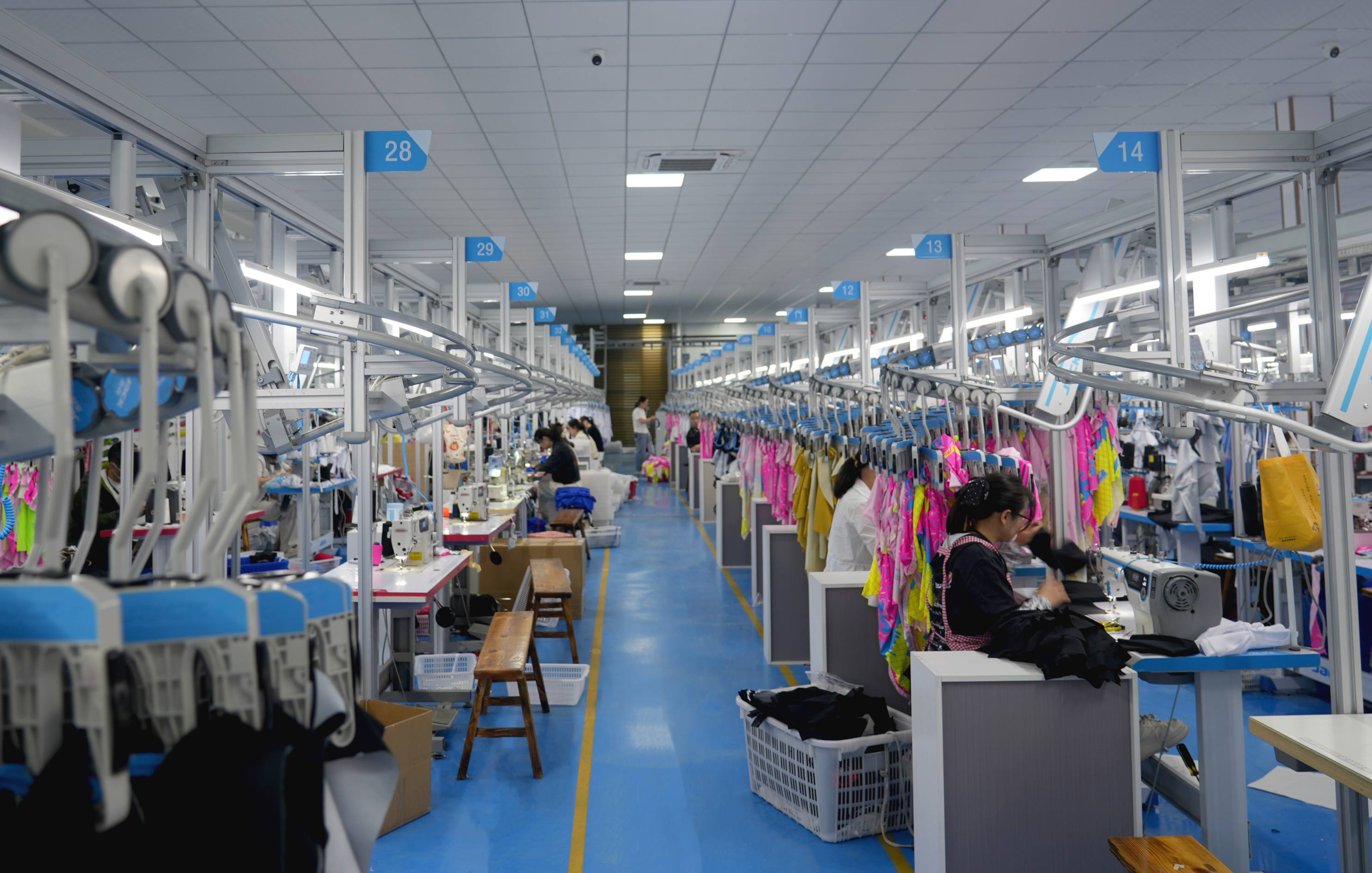
A period underwear manufacturer improves product performance by measuring how fast fluid enters the gusset, how much it retains under pressure, where leakage starts, and how those results change after washing. A useful development program compares at least 3–5 constructions per style, records capacity in grams, acquisition time in seconds, rewet mass, hydrostatic resistance, drying time, stretch recovery, and dimensional change. Testing should cover new garments plus repeated laundering, because ISO 6330:2021 provides standardized domestic washing and drying procedures. Better performance comes from balancing absorption, surface dryness, fit, barrier reliability, breathability, and wash durability rather than maximizing absorbency alone.
Period underwear usually combines a skin-contact fabric, a liquid-transfer layer, an absorbent layer, a waterproof membrane, and the outer garment fabric. A manufacturer should evaluate those materials as one system because a 20% increase in absorbent mass can add thickness without producing a similar improvement in usable capacity when liquid remains concentrated near the entry point.
The first measurement should therefore be fluid acquisition rather than total capacity. AATCC TM195 evaluates liquid moisture-management behavior in knitted, woven, and nonwoven textiles, including absorption and transport properties created by fiber, yarn, and fabric structure.
A gusset that holds 40 g in a final saturation test can still leak earlier than one holding 30 g if the first structure takes too long to move fluid away from the surface.
A practical factory protocol can apply controlled doses at several intervals rather than pouring the entire test volume at once. If 5 mL applications are repeated 6 times, technicians can record acquisition time after every dose and see whether the fifth or sixth application takes 50% longer than the first.
That result leads naturally to fluid distribution. A wet area concentrated in a 60 × 80 mm section uses far less of a 250 mm-long gusset than a construction that moves liquid toward the front and rear, so capacity data should be paired with wet-area length and width.
Manufacturers can compare distribution layers by weighing identical specimens and applying the same fluid volume, temperature, resting interval, and pressure. A 2026 production specification might require the selected construction to keep acquisition time within an agreed range while increasing the used absorbent area by 15–25% compared with the first prototype.
| Performance check | Useful measurement | Manufacturing use |
|---|---|---|
| Fluid acquisition | Seconds per controlled dose | Compare top and transfer fabrics |
| Retention | Grams held after loading | Compare absorbent structures |
| Rewet | Grams transferred under pressure | Estimate surface wetness |
| Barrier resistance | Hydrostatic pressure | Check membrane integrity |
| Drying | Minutes or hours | Compare multilayer constructions |
| Dimensional change | % after laundering | Control shrinkage |
| Recovery | % after extension | Check long-term fit |
Capacity should then be checked under compression because body movement changes how stored liquid behaves. A sample may retain 25 g while lying flat but release noticeably more moisture when compressed, so rewet measurements should be recorded at the same pressure, contact area, and dwell time for every construction.
Surface fabric selection has a strong effect here. A very absorbent skin-contact fabric can hold liquid close to the body, while a fabric designed for rapid transfer can move moisture toward the storage layer; AATCC also lists separate methods for vertical wicking, horizontal wicking, and textile drying behavior, allowing development teams to separate transport speed from total storage.
Once surface dryness is acceptable, waterproof performance needs its own specification. ISO 811:2018 measures textile resistance to water penetration through hydrostatic pressure and was reviewed and confirmed as current in 2025, making it a useful reference for water-resistant textile layers.
Testing only unused membrane rolls is not enough. Manufacturers should test laminated material, sewn assemblies, and complete garments because needle holes, bonding temperature, adhesive coverage, and seam placement can create leakage even when the incoming membrane passes inspection.
For example, evaluate at least 10 finished garments from a pilot lot rather than one laboratory swatch. If 2 of 10 units leak around the same seam while all membrane specimens pass, the production process deserves attention before adding another absorbent layer.
Gusset dimensions deserve the same level of measurement. Width at the narrowest section, front extension, rear extension, absorbent-zone length, seam location, and distance from the garment center line should be recorded in millimeters for every size instead of enlarging one base pattern by the same percentage.
A medium and a 3XL body do not place the garment under identical stretch, so grading should be verified on several sizes. A wear assessment with 20–30 participants distributed across the intended size range can record shifting, front leakage, rear leakage, edge leakage, perceived wetness, and fit after defined wear periods.
That feedback should be connected to the location of each failure. Side leakage while 30% of the rear absorbent area remains dry suggests poor distribution or insufficient lateral coverage; rear leakage during sleep points toward placement and coverage rather than simply insufficient total absorption.
Treat the first leak location as a measurement. “Leaked at 28 g” gives less engineering information than “left edge leakage began after the fourth 7 g application while the rear 35% remained unused.”
Thickness and drying time then become easier to manage. Adding another 80–120 gsm layer may raise capacity, but it can also increase water retained after washing and make air drying slower, especially when moisture is enclosed between dense fabrics and a low-permeability membrane.
A better comparison records grams absorbed per gram of absorbent material and grams absorbed per millimeter of finished gusset thickness. If prototype A retains 32 g at 3.8 mm while prototype B retains 29 g at 2.6 mm, the manufacturer can compare the 10% capacity difference against a gusset that is roughly 32% thinner.
Laundry durability must follow because period underwear is sold as reusable apparel. ISO 6330:2021 specifies domestic textile washing and drying procedures and includes 16 washing procedures for Type A machines, 12 for Type B, 7 for Type C, plus six drying procedures.
Instead of checking only new garments, manufacturers can establish checkpoints at 1, 10, 25, and 50 wash cycles. At every point, repeat absorption, acquisition, rewet, barrier, garment measurement, seam inspection, and elastic recovery tests under the same conditions.
The comparison can reveal whether a 5% waistband growth appears after 25 washes, whether the gusset shrinks 3% while the outer fabric shrinks 1%, or whether acquisition becomes slower after detergent residues accumulate. Separate material shrinkage data also help explain wrinkling or distortion inside multilayer constructions.
Bonded constructions require additional controls because heat, pressure, dwell time, and adhesive application influence durability. A production team can set an approved bonding window and sample several garments per shift, then compare peel strength before washing and after 10 or 25 cycles instead of relying on visual inspection.
The same approach applies to elastics. If a leg opening is extended to a defined length for 30 seconds and fails to return close to its original measurement, the gusset may shift during movement even though every absorbency result remains unchanged.
Production consistency becomes more important once development moves from 20 samples to 20,000 units. Fabric GSM, usable width, absorbent-layer placement, seam allowance, elastic tension, lamination settings, and finished measurements should have written tolerances that purchasing, cutting, sewing, bonding, and quality teams use together.
For a manufacturer such as Ljvogues, maintaining an internal material library can reduce repeated development work. Each approved fabric can be stored with composition, GSM, thickness, stretch, recovery, wicking, absorption, drying time, shrinkage, membrane compatibility, supplier lot information, and results after 25 or 50 washes.
Batch sampling should also reflect production scale. Checking 1 garment from a 5,000-piece order says very little about consistency; a defined sampling plan can spread inspection across fabric lots, sewing lines, sizes, and production dates so repeated defects are easier to identify.
Chemical control belongs in the same supplier system. California's AB 1817 prohibits, from January 1, 2025, the manufacture, distribution, sale, or offer for sale of new textile articles containing regulated PFAS; the law defines a total organic fluorine threshold of 100 ppm from 2025 and 50 ppm from January 1, 2027.
A manufacturer supplying the US market should therefore collect chemical declarations and compliance documentation for membranes, finishes, dyes, elastics, adhesives, and other components rather than checking only the main fabric. Material substitutions should trigger another review because a new finish can alter both moisture behavior and chemical compliance.
Performance claims should finally match the test method used. “Holds 30 mL,” “up to 12 hours,” and “equivalent to several tampons” describe different things; unless the test design supports the comparison, a technically precise claim based on measured grams or milliliters is easier to reproduce and defend.
For product approval, compare at least 3 candidate constructions using the same liquid dose, specimen conditioning, loading sequence, pressure, wash procedure, and failure definition. A useful manufacturing specification records both the average result and the allowable variation, because two batches averaging 30 g can behave very differently when one ranges from 29–31 g and another from 22–38 g.
That specification can continue into bulk production through incoming-material checks, in-process inspection, finished-garment tests, and scheduled wash validation. When measurements from 2025 or 2026 production lots are stored against supplier batch numbers and style versions, engineers can compare changes without relying on memory or subjective descriptions.